Kubernetes isn’t just up in 2026; it’s becoming the default foundation for production software and AI. The latest CNCF Annual Cloud Native Survey shows that Kubernetes is now the backbone of production infrastructure, with 82% of container users running Kubernetes in production and 94% either running, piloting, or evaluating it. At this point, the real question for most teams isn’t whether they should use Kubernetes but how to run it safely, efficiently, and at scale without burning out in-house teams.
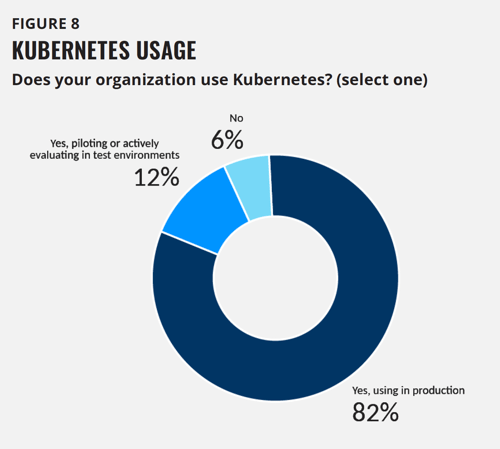
If you look at the CNCF survey data, Kubernetes has clearly crossed the line from experiment to foundation. Production use climbed from about two‑thirds of container users in 2023 to four‑fifths by 2024, and cloud native techniques are now the norm for 98% of organizations.
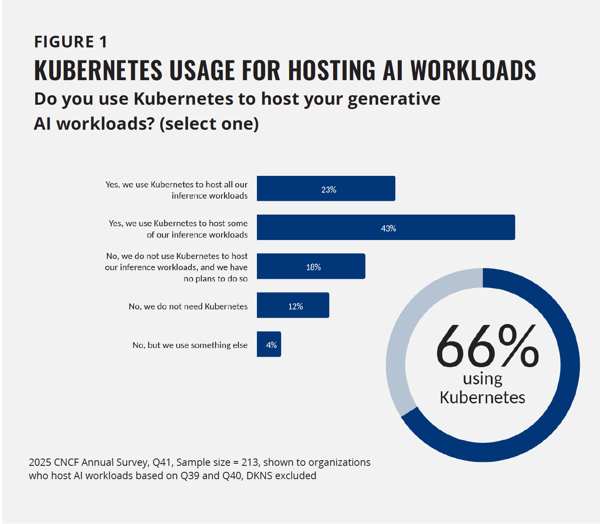
You can see that shift inside most companies. Kubernetes isn’t the cool side project in one team anymore; it’s the essential platform under customer‑facing apps, internal systems, and an increasing number of AI services. Today, 66% of organizations are also running generative AI workloads on Kubernetes.
That curve hasn’t flattened yet and doesn’t look like it will any time soon; CNCF’s year‑over‑year data shows Kubernetes production usage and AI workloads both rising into 2025, which is why 2026 is less about whether to use Kubernetes and more about whether your platform can keep up.
So why does Kubernetes keep gaining traction instead of leveling off? A few big forces are at play.
Training jobs, data processing, and especially inference are moving into production environments. The CNCF survey notes that Kubernetes is becoming the de facto orchestration layer and platform for AI as more organizations run inference workloads on clusters across clouds and on‑prem. Another recent production‑Kubernetes survey shows the same pattern: AI is now one of the primary growth drivers for Kubernetes usage, with the vast majority of teams expecting AI workloads on their clusters to increase over the next year.
Teams don’t want separate, bespoke infrastructure just for AI if they can avoid it, and Kubernetes gives them one place to run GPU‑heavy workloads, data pipelines, and regular services with consistent tooling and deployment practices. GPU efficiency really matters now: GPUs are expensive, and leadership notices when they sit idle.
Kubernetes scheduling, autoscaling, and resource controls help teams keep GPU nodes busy and shared across teams instead of locked to one project. The CNCF survey and related analyses point out that GPU‑centric AI workloads are a major Kubernetes use case and an important driver of how organizations architect and operate their clusters. That financial pressure pushes more AI work onto Kubernetes, not less.
Put simply, once AI shows up in your roadmap, it pulls Kubernetes deeper into the center of your infrastructure story, not out of it.
Microservices and containers are now the mainstream choice for new apps and a common path for modernization, which naturally leads to Kubernetes as the orchestration layer. It can handle both new services and migrated workloads across multiple clouds and environments, and the official Kubernetes documentation and CNCF ecosystem make it easier to adopt best practices over time.
With services like Amazon EKS, Google Kubernetes Engine, and Azure Kubernetes Service, teams don’t have to run their own control planes anymore. It’s much easier to spin up clusters and say yes when another team asks for their own environment. That convenience is great, but it also means clusters multiply faster than solid governance, security, and cost controls if you’re not careful.
Platform teams and Internal Developer Platforms are putting GUIs, CLIs, templates, and golden paths in front of Kubernetes so developers don’t have to think about YAML and kubectl every day. Developers click a button or run a simple command and get a service, a namespace, or a deployment. Under the hood, it’s still Kubernetes doing the work, which means your footprint grows even if most developers never touch raw cluster APIs. Platformengineering.org’s guide on golden paths shows how often Kubernetes sits at the core of these platforms.
Because Kubernetes is the backbone of so many production stacks and AI workloads, most teams look a lot like the organizations in the CNCF survey: cloud native is standard, Kubernetes is boring in the best way, and the hard part is everything around it. The difference between teams that thrive and teams that burn out usually comes down to three deliberate choices: treating Kubernetes as a shared product instead of a collection of pet clusters, enforcing guardrails and golden paths instead of one‑off fixes, and choosing how much of the day‑to‑day cluster work your own people really need to own.
If Kubernetes is running more and more of your production and AI stack, you probably feel a few of these already:
If your clusters, workloads, and AI initiatives are multiplying faster than your platform capacity, that’s not a sign you’re failing; it’s a sign you’ve hit the same inflection point as the rest of the industry. This is exactly the phase Fairwinds focuses on. We turn Kubernetes from the thing that keeps breaking into a stable, AI‑ready foundation under everything else you’re building. With managed Kubernetes and platform guidance, your engineers can spend more time on new features, better customer experiences, and smarter AI instead of constantly dealing with emergency upgrade windows.
In practice, that means Fairwinds:
Kubernetes is already eating your production; the real question for 2026 is whether it does that on your terms, with guardrails and help, or through one more round of 2 a.m. pages.